
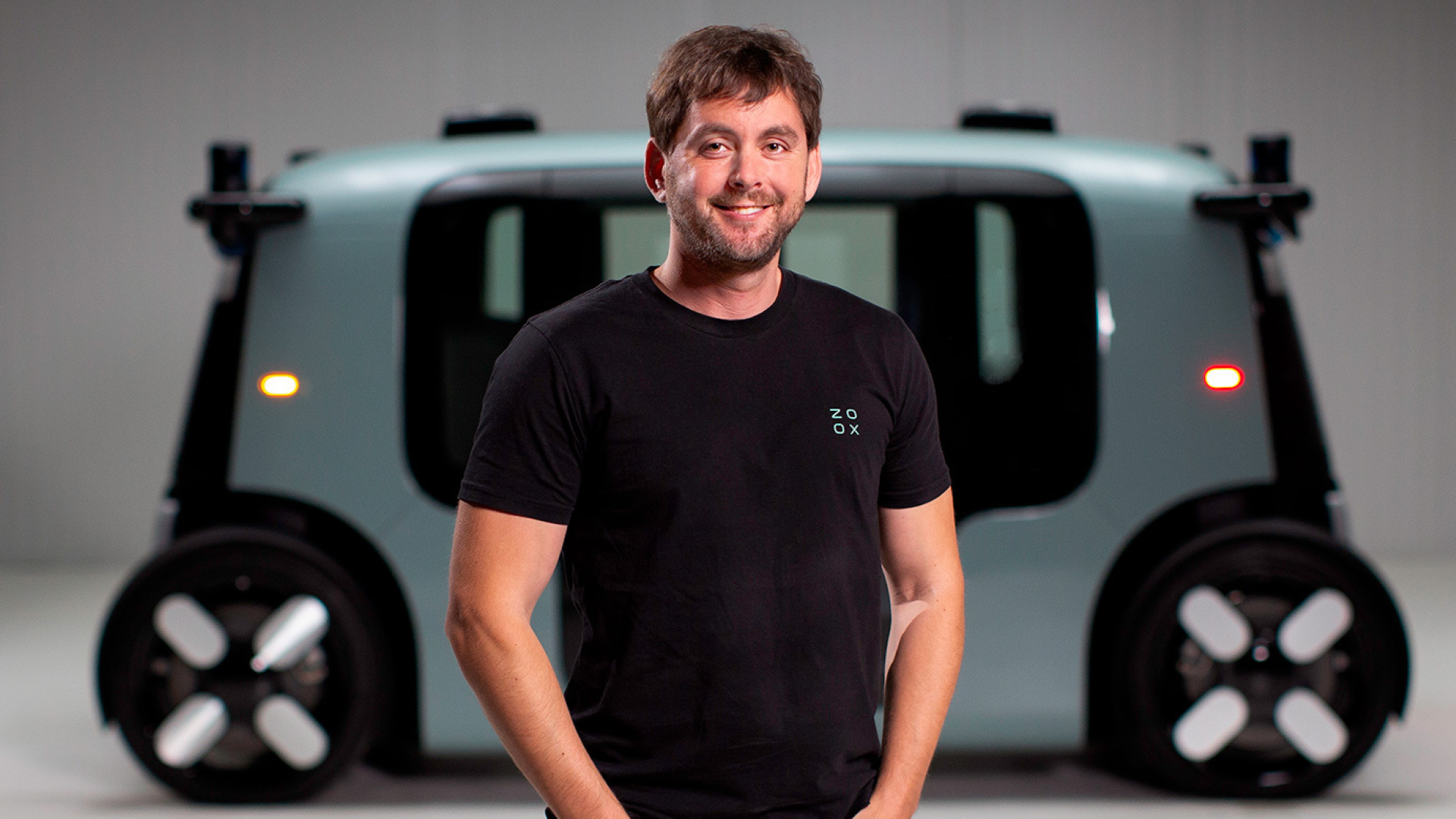
Jesse Levinson won’t declare victory just yet, not even when his team’s AI is already performing at superhuman levels. Instead, he focuses on measurable improvement. At Zoox, the autonomous mobility company he co-founded and now serves as Chief Technology Officer, Levinson is leading a new era of transportation defined by clean, safe, bidirectional electric vehicles built specifically for riders. “We never say we’re done,” he explains. That philosophy drives Zoox’s continuous testing approach: millions of simulations, constant data benchmarking, and a custom-built supercomputer cluster that supports thousands of GPUs. Levinson’s approach is rooted in precision, iteration, and a refusal to settle even after Amazon acquired Zoox for $1.2 billion in 2020.
Born in the United States, Levinson earned his bachelor’s degree in computer science from Princeton University, graduating summa cum laude. He later completed a Ph.D. and postdoctoral research at Stanford University, where he worked under AI pioneer Sebastian Thrun. At Stanford, Levinson helped lead the development of self-driving algorithms that contributed to the $1 million-winning entry in the 2007 DARPA Urban Challenge. His early work in mobile imaging led to the creation of Pro HDR, the first HDR app for smartphones. Today, as Zoox CTO, he oversees the development of fully autonomous, all-electric robotaxis purpose-built for urban ride-hailing. The vehicles are symmetrical, lack a steering wheel, and include features like wireless phone charging and real-time rider data screens.
For Levinson, transformation at scale requires a seamless integration of software and infrastructure. That’s why he’s invested in developer tools and hybrid compute systems that let his team iterate fast—spinning up thousands of GPU-powered instances both on-premises and in the cloud. “We’ve built some wonderful developer tools to make it as easy as possible,” he says, pointing to the company’s ability to test, refine, and deploy at high velocity. His commitment to iterative improvement and scalable systems has helped position Zoox not only as a pioneer in Mobility-as-a-Service but as a case study in how AI and hardware co-evolve to shape the future of urban mobility.